lunes, 3 de diciembre de 2018

Modal Perfects

They express possibility or probability. When used with the infinitive form of the perfect ("have" + past participle), modal verbs indicate speculation about things in the past.

"Must have" is used to express a logical conclusion about something that happened in the past We are not sure exactly what happened, but based on the evidence, we can come to some conclusion, unlike "might have" or "may" have ", as we will see later," must have "expresses more certainty.

"May have" and "might have" are used to express possibility in the past. The use of these two manners also expresses uncertainty.

"Can not have" is used in a similar way to "must have", but in the negative way. We can use "can not have" when we are fairly certain that something did not happen or that it was not true in the past.

"Should have" and "ought to have" is used when something did not happen, but it would have been better if it had happened. In the negative, these referents indicate that something happened, but it would have been better if it had not been like that.
SAY VS. TELL

"Say" is used in the direct and indirect style. If we want to use "say" with a personal object, we need to use the preposition "to".

"Tell" with the direct and indirect style, although the use with direct style is not so common. When we use "tell" we need to use an indirect object that goes behind the verb.


Resultado de imagen para say vs tell


You can also use "tell" with the direct and indirect style, although the use with direct style is not so common. When we use "tell" we need to use an indirect object that goes behind the verb.
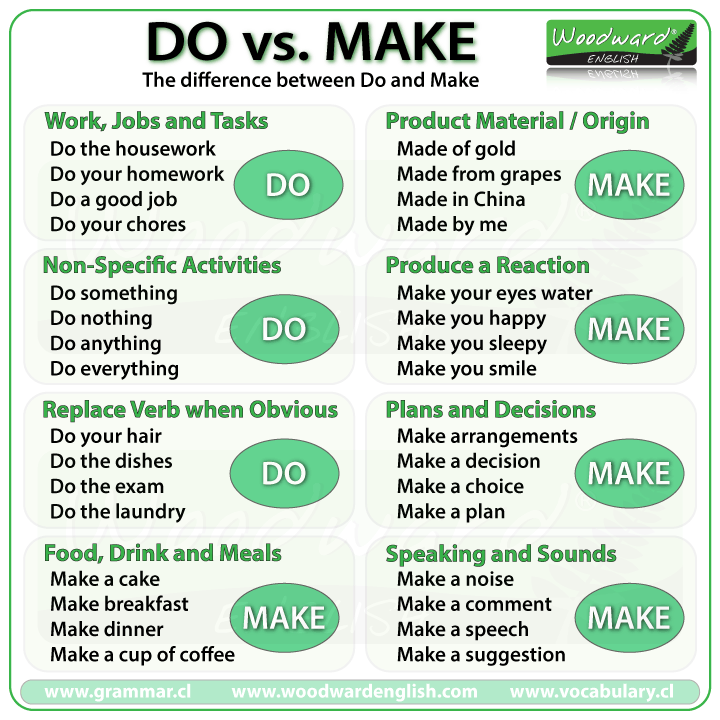
DO VS. MAKE

"Do" and "make" are two verbs that are frequently confused in English. Both can be translated as "to do", but there are some differences in their meaning. In general, "doing" considers the action more, while using "doing" we refer more to the outcome of the action. 
"Do" is used for actions, activities and jobs. It is used in a broad sense, as to "perform". In general, these actions and activities do not produce a physical object.  "Do" is used when we talk about things in general, when we do not specify the activity. In this sense, it is used a lot with indefinite pronouns like "something", "anything", "nothing".
"Make" is used in the sense of "manufacture", "elaborate" or "create". It is used for activities that create something that can be touched, a physical object. There are many expressions that use "make". In many of these, the meaning of "make" is not "manufacture" or "do" and very often "do" seems more appropriate, but they are established expressions, so you have to memorize them.

Resultado de imagen para do vs make
Grettings & Firewalls

Greetings 
Good morning.
 Good afternoon
Good evening. 
Hello. 
Hey!
How's it going? 
How are you? 
How are you all? 

Good-byes/Farewells 
Good-bye.
Good night. 
See you later.
See you tomorrow. 
See you soon. 
See you then.
Take care.
So long.

Countries & Nationalities

CountryNationality
(Adjective)
Nationailty
(Noun)
Language
AfghanistanAfghanan AfghanPersian - Pashto
AlbaniaAlbanianan AlbanianAlbanian
AlgeriaAlgerianan AlgerianArabic
ArgentinaArgentine
Argentinian
an Argentine
an Argentinian
Spanish
AustraliaAustralianan AustralianEnglish
AustriaAustrianan AustrianGerman
BangladeshBangladeshia BangladeshiBengali
BelgiumBelgiana BelgianFrench / Flemish
BoliviaBoliviana BolivianSpanish
BotswanaBatswanaa BotswananEnglish, Setswana
BrazilBraziliana BrazilianPortuguese
BulgariaBulgariana BulgarianBulgarian
CambodiaCambodiana CambodianCambodian
CameroonCamerooniana CameroonianFrench / English
CanadaCanadiana CanadianEnglish / French
ChileChileana ChileanSpanish
ChinaChinesea Chinese personChinese
Colombia *Colombiana ColombianSpanish
Costa RicaCosta Ricana Costa RicanSpanish
CroatiaCroatiana CroatCroatian
CubaCubana CubanSpanish
Czech RepublicCzecha Czech personCzech
DenmarkDanisha DaneDanish
Dominican RepublicDominicana DominicanSpanish
EcuadorEcuadorianan EcuadorianSpanish
EgyptEgyptianan EgyptianArabic
El SalvadorSalvadoriana SalvadoranSpanish
EnglandEnglishan Englishman
an Englishwoman
English
EstoniaEstonianan EstonianEstonian
EthiopiaEthiopianan EthiopianAmharic
FijiFijiana FijianEnglish, Fijian
FinlandFinnisha FinnFinnish
FranceFrencha Frenchman
a Frenchwoman
French
GermanyGermana GermanGerman
GhanaGhanaiana GhanaianEnglish
GreeceGreeka GreekGreek
GuatemalaGuatemalana GuatemalanSpanish
HaitiHaitiana HaitianFrench / Creole
HondurasHondurana HonduranSpanish
HungaryHungariana HungarianHungarian
IcelandIcelandican IcelanderIcelandic
IndiaIndianan IndianHindi / English
IndonesiaIndonesianan IndonesianIndonesian
IranIranianan IranianPersian
IraqIraqian IraqiArabic, Kurdish
IrelandIrishan Irishman
an Irishwoman
Irish / English
IsraelIsraelian IsraeliHebrew
ItalyItalianan ItalianItalian
JamaicaJamaicana JamaicanEnglish
JapanJapanesea Japanese personJapanese
JordanJordaniana JordanianArabic
KenyaKenyana KenyanSwahili
KuwaitKuwaitia KuwaitiArabiv
LaosLaoa LaotainLaotian
LatviaLatviana LatvianLatvian
LebanonLebanesea LebaneseArabic
LibyaLibyana LibyanArabic
LithuaniaLithuaniana LithuanianLithuanian
MalaysiaMalaysiana MalaysianMalay / Malaysian
MaliMaliana MalianFrench
MaltaMaltesea MalteseEnglish, Maltese
MexicoMexicana MexicanSpanish
MongoliaMongoliana MongolianMongolian
MoroccoMoroccana MoroccanArabic / French
MozambiqueMozambicana MozambicanPortuguese
NamibiaNamibiana NambianEnglish
NepalNepalesea NepaleseNepali, English
NetherlandsDutcha Dutchman
a Dutchwoman
Dutch
New ZealandNew Zealanda New ZealanderEnglish / Maori
NicaraguaNicaraguana NicaraguanSpanish
NigeriaNigeriana NigerianEnglish
NorwayNorwegiana NorwegianNorwegian
PakistanPakistania PakistaniUrdu, English
PanamaPanamaniana PanamanianSpanish
ParaguayParaguayana ParaguayanSpanish
PeruPeruviana PeruvianSpanish
PhilippinesPhilippinea FilipinoTagalog / Filipino
PolandPolisha PolePolish
PortugalPortuguesea Portuguese personPortuguese
RomaniaRomaniana RomanianRomanian
RussiaRussiana RussianRussian
Saudi ArabiaSaudia Saudi (Arabian)Arabic
ScotlandScottisha ScotEnglish
SenegalSenegalesea Senegalese personFrench
SerbiaSerbiana SerbianSerbian
SingaporeSingaporeana SingaporeanEnglish, Malay, Mandarin, Tamil
SlovakiaSlovaka SlovakSlovak
South AfricaSouth Africana South AfricanAfrikaans, English, + 9 more
South KoreaKoreana KoreanKorean
SpainSpanisha SpaniardSpanish
Sri LankaSri Lankana Sri LankanSinhala, Tamil
SudanSudanesea Sudanese personArabic, English
SwedenSwedisha SwedeSwedish
SwitzerlandSwissa Swiss personGerman, French, Italian, Romansh
SyriaSyriana SyrianArabic
TaiwanTaiwanesea Taiwanese personChinese
TajikistanTajikistania TajikistaniTajik (Persian)
ThailandThaia Thai personThai
TongaTongana TonganEnglish, Tongan
TunisiaTunisiana TunisianArabic
TurkeyTurkisha TurkTurkish
UkraineUkrainiana UkranianUkrainian
United Arab EmiratesEmiratian EmiratiArabic
(The) United KingdomBritisha BritEnglish
(The) United StatesAmerican **an AmericanEnglish
UruguayUruguayana UruguayanSpanish
VenezuelaVenezuelana VenezuelanSpanish
VietnamVietnamesea Vietnamese personVietnamese
WalesWelsha Welshman
a Welshwoman
Welsh / English
ZambiaZambiana ZambianEnglish
The Cardinal Number


Cardinal numbers from 1 through 1,000,000
1one11eleven21twenty-one31thirty-one
2two12twelve22twenty-two40forty
3three13thirteen23twenty-three50fifty
4four14fourteen24twenty-four60sixty
5five15fifteen25twenty-five70seventy
6six16sixteen26twenty-six80eighty
7seven17seventeen27twenty-seven90ninety
8eight18eighteen28twenty-eight100a/one hundred
9nine19nineteen29twenty-nine1,000a/one thousand
10ten20twenty30thirty1,000,000
a/one million


The Ordinal Number


Ordinal Numbers from 1 through 1,000,000
1stfirst11theleventh21sttwenty-first31stthirty-first
2ndsecond12thtwelfth22ndtwenty-second40thfortieth
3rdthird13ththirteenth23rdtwenty-third50thfiftieth
4thfourth14thfourteenth24thtwenty-fourth60thsixtieth
5thfifth15thfifteenth25thtwenty-fifth70thseventieth
6thsixth16thsixteenth26thtwenty-sixth80theightieth
7thseventh17thseventeenth27thtwenty-seventh90thninetieth
8theighth18theighteenth28thtwenty-eighth100thone hundredth
9thninth19thnineteenth29thtwenty-ninth1,000thone thousandth
10thtenth20thtwentieth30ththirtieth1,000,000thone millionth

https://www.youtube.com/watch?v=h_3AI-qNBlE
Differences Should/Must

Should
It is used to give advice, such as "should" in Spanish. It's a way of expressing advice fairly directly, and there are ways that are considered friendlier. Compare the following examples:

-You should make sure your safety equipment is in good condition before entering.
-You might want to add some color to that.
-Would not you rather finish this now so you can rest later? 


Must
It is used to express a restrictive obligation. The difference with "should" is quite clear, since here we are not expressing a council but an internal order, norm or obligation. Here are some examples:

-I must do this on my own.
-Books must be returned to the library where they were borrowed. 
-You must never speak of this again. 


Resultado de imagen para must and should difference


Verb to be.

In English, verbs have a very important place in communication, they are the ones responsible for expressing actions. Words like jump, run, speak… all are common and clear examples of verbs that describe an action that a subject does. However, there is one verb that’s the most used in the English language: the verb to be.
For children, learning the verbs -and especially this one- might be a difficult task. Verbs are concepts that some kids might find hard to grasp, but through constant repetition using different activities and exercises, learning about it can be easy, and even fun! It’s essential for the little ones to learn the uses of the "to be" verb, after all, it’s used frequently and for a lot of different purposes.

How to use the “to be” verb

The “to be” is a verb used to describe something or someone. In English, it can be used to say different things according to the context. However, the most common use of the to be verb is to talk about names, age, feeling, nationalities, and professions, especially when talking in the present tense.
The most tricky thing about this verb, however, is that It’s also one of the most irregular verbs in the English language. This means, that unlike regular verbs, which barely change when used when different subjects -or even in different tenses-, and when they do, they follow a pattern, the “to be” verb changes almost completely in most of its forms.

Forms of “to be”

Since the to be verb is highly irregular, it’s written in different ways according to the tense of the verb (whether if it’s present, past, future, or even in mixed tenses), and it also varies according to the subject. Let’s see the forms this verb can take when used next to the subjects.

Resultado de imagen para verb to be

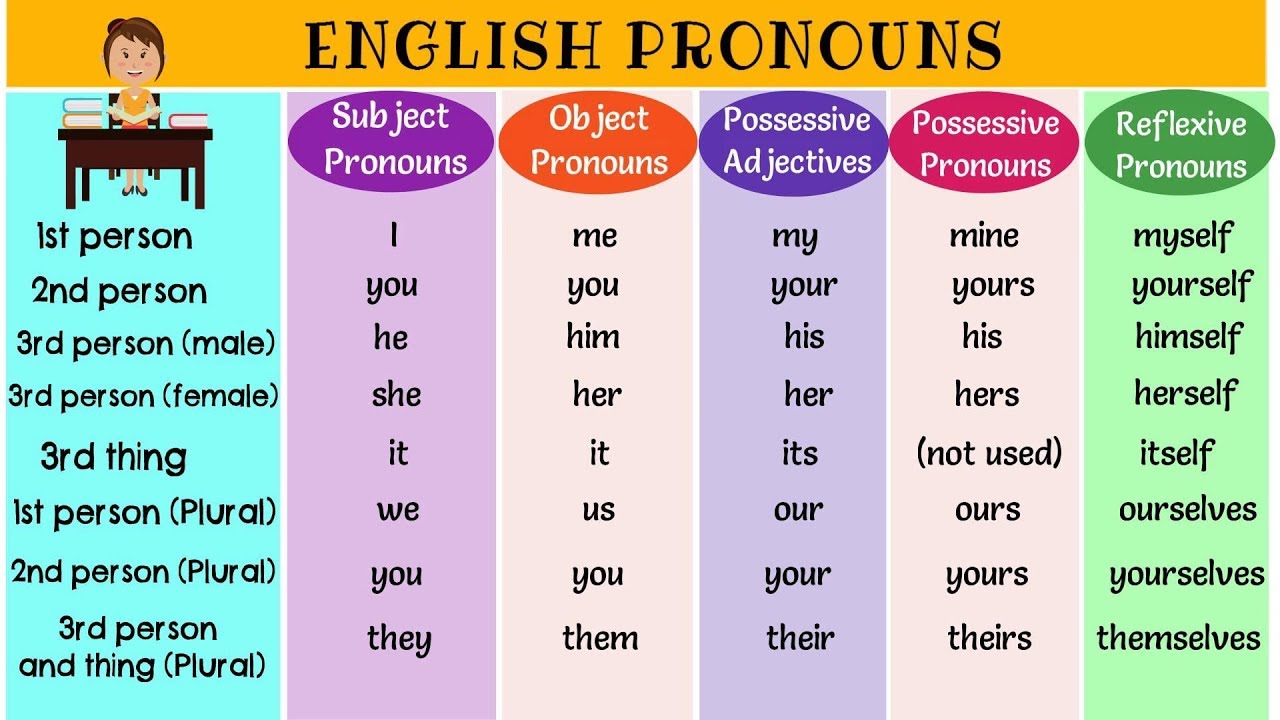
Pronouns.

Los pronombres son palabras que se utilizan principalmente para reemplazar un sustantivo en la oración. Sin embargo, existen diversos tipos de pronombres en inglés (pronouns in English), cada uno de los cuales tiene un propósito definido en la oración. La definición más sencilla establece que un pronombre en inglés es una palabra generalmente pequeña la cual sustituye a los sustantivos (nouns) para que el texto sea menos repetitivo. Estas sustituciones se deben entender al leer el texto.
Para los niños que tienen inglés como lengua nativa, aprender los pronombres en inglés ocurre de manera natural. Frecuentemente los escuchan en conversaciones, y aprenden a utilizarlos en situaciones similares, lo cual les ayuda a familiarizarse con el lenguaje. Ésto es un buen método de aprendizaje para aquellos niños que hablan inglés como segunda lengua. Incluso pequeños menores de dos años de edad son capaces de utilizar los pronombres personales de manera sencilla para expresarse, especialmente al usar la palabra «I». Esto es un gran logro para los peques, pues les ayuda a comenzar a expresar su individualidad. Lo que es más importante, al aprender a utilizar los pronombres en las conversaciones del día a día, los niños pueden comenzar a dominar los verbos en inglés para construir nuevas oraciones con nuevos significados.


Resultado de imagen para PRONOUNS


Modal Perfects They express possibility or probability. When used with the infinitive form of the perfect ("have" + past part...